Table Of Content
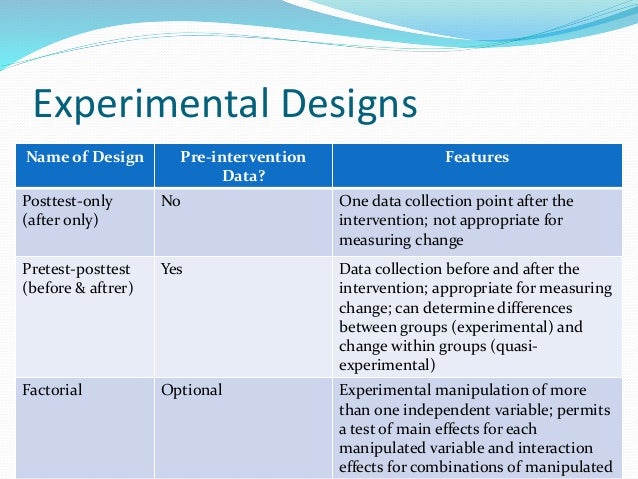
Relative to an RCT, ITS designs can also allow for a more comprehensive assessment of the longitudinal effects of an intervention (positive or negative), as effects can be traced over all included time points (Bernal et al., 2017; Penfold and Zhang, 2013). But at the same time there is a control group that is given a pretest, does not receive the treatment, and then is given a posttest. The question, then, is not simply whether participants who receive the treatment improve but whether they improve more than participants who do not receive the treatment. Table 2 provides examples of studies using SWD that have used one or more of the design approaches described above to improve the internal validity of the study. In the study by Killam et al 2010 (31), a non-randomized SWD was used to evaluate a complex clinic-based intervention for integrating anti-retro viral (ART) treatment into routine antenatal care in Zambia for post-partum women.
Can I perform a meta-analysis on pre/post 'quasi-experimental studies' using revman? - ResearchGate
Can I perform a meta-analysis on pre/post 'quasi-experimental studies' using revman?.
Posted: Wed, 07 Oct 2020 07:00:00 GMT [source]
Signed in but can't access content
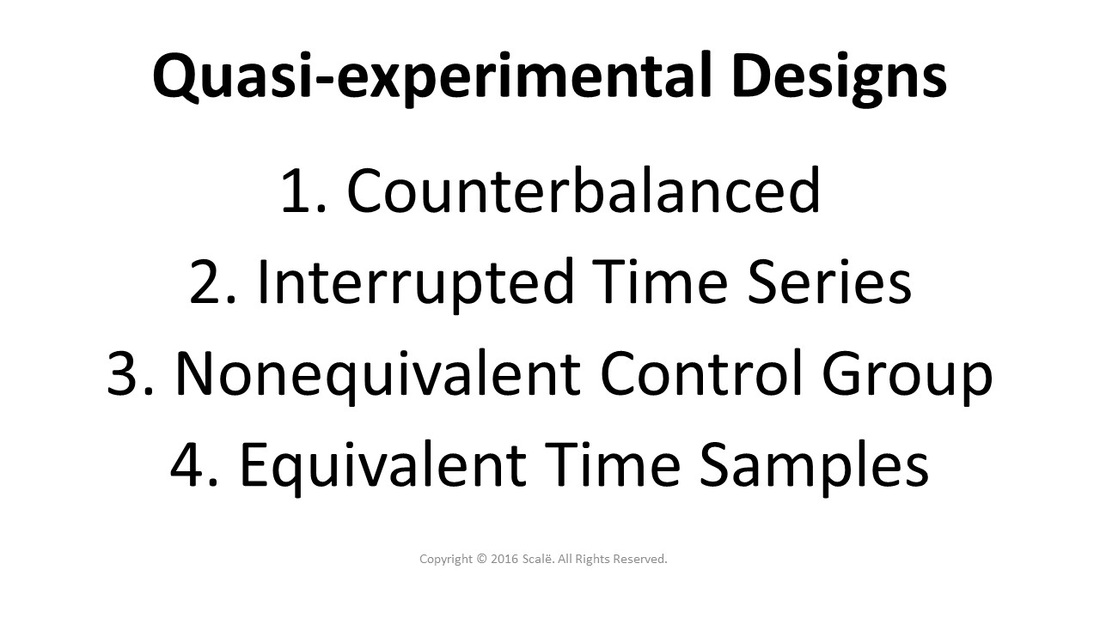
Overall, then, stepped wedges represent useful tools for evaluating the impact of health interventions that (as with all designs) are subject to certain weaknesses and limitations. Another alternative explanation for a change in the dependent variable in a pretest-posttest design is regression to the mean. Regression to the mean can be a problem when participants are selected for further study because of their extreme scores. A closely related concept—and an extremely important one in psychological research—is spontaneous remission. In reviewing the results of several studies of treatments for depression, researchers Michael Posternak and Ivan Miller found that participants in waitlist control conditions improved an average of 10 to 15% before they received any treatment at all (Posternak & Miller, 2001).
Quasi-Experimental Research Designs : Clinical Nurse Specialist
The resulting confounding between site assignment and time can threaten the internal validity of the study—although, as above, balancing algorithms can reduce this risk. Third, the use of formative evaluation (Elwy, this issue), while useful for maximizing the utility of implementation efforts in a stepped wedge, can mean that late-wave sites receive different implementation strategies than early-wave sites. Similarly, formative evaluation may inform midstream adaptations to the clinical innovation being implemented.
Experimental and Quasi-Experimental Designs in Implementation Research
He noted that when the average height of the parents was greater than the mean of the population, the children tended to be shorter than their parents, and conversely, when the average height of the parents was shorter than the population mean, the children tended to be taller than their parents. To get the true effect of the intervention of interest, we need to control for the confounding variable. You can use two-group tests, time-series analysis, and regression analysis to analyze data in a quasi-experiment design. This kind of experiment would raise ethical concerns since the participants assigned to the treatment group are required to eat junk food against their will throughout the experiment. This type of quasi-experimental research design calculates the impact of a specific treatment or intervention. This design involves selecting participants based on a specific cutoff point on a continuous variable, such as a test score.
Thus, such designs are well-suited to answering questions about what implementation strategies should be used, in what order, to achieve the best outcomes in a given context. In comparison to simple pre-post designs in which the average outcome level is compared between the pre- and post-intervention periods, the key advantage of ITS designs is that they evaluate for intervention effect while accounting for pre-intervention trends. Such trends are common due to factors such as changes in the quality of care, data collection and recording, and population characteristics over time.
You are unable to access statisticsbyjim.com
If at the end of the study there was a difference in the two classes’ knowledge of fractions, it might have been caused by the difference between the teaching methods—but it might have been caused by any of these confounding variables. The main advantage of this design is that it controls for potentially different time-varying confounding effects in the intervention group and the comparison group. In our example, measuring points O1 and O2 would allow for the assessment of time-dependent changes in pharmacy costs, e.g., due to differences in experience of residents, preintervention between the intervention and control group, and whether these changes were similar or different. In some implementation science contexts, policy-makers or administrators may not be willing to have a subset of participating patients or sites randomized to a control condition, especially for high-profile or high-urgency clinical issues. Quasi-experimental designs allow implementation scientists to conduct rigorous studies in these contexts, albeit with certain limitations. We briefly review the characteristics of these designs here; other recent review articles are available for the interested reader (e.g. Handley et al., 2018).
Because in this study design, the two groups may not be equivalent (assignment to the groups is not by randomization), confounding may exist. For example, suppose that a pharmacy order-entry intervention was instituted in the medical intensive care unit (MICU) and not the surgical intensive care unit (SICU). O1 would be pharmacy costs in the MICU after the intervention and O2 would be pharmacy costs in the SICU after the intervention. Also, the absence of pretest measurements comparing the SICU to the MICU makes it difficult to know whether differences in O1 and O2 are due to the intervention or due to other differences in the two units (confounding variables). In this paper, we review the different pretest-posttest quasi-experimental study designs, their nomenclature, and the relative hierarchy of these designs with respect to their ability to establish causal associations between an intervention and an outcome. The example of a pharmacy order-entry system aimed at decreasing pharmacy costs will be used throughout this article to illustrate the different quasi-experimental designs.
Zombre et al (52) maintained a large number of control number of sites during the extended study period and were able to look at variations in seasonal trends as well as clinic-level characteristics, such as workforce density and sustainability. In addition to including a control group, several analysis phase strategies can be employed to strengthen causal inference including adjustment for time varying confounders and accounting for auto correlation. It can be useful to obtain pre-test data or baseline characteristics to improve the comparability of the two groups.
For example, consider a hypothetical RCT that aims to evaluate the implementation of a training program for cognitive behavioral therapy (CBT) in community clinics. Randomizing at the patient level for such a trial would be inappropriate due to the risk of contamination, as providers trained in CBT might reasonably be expected to incorporate CBT principles into their treatment even to patients assigned to the control condition. Randomizing at the provider level would also risk contamination, as providers trained in CBT might discuss this treatment approach with their colleagues. While such clustering minimizes the risk of contamination, it can unfortunately create commensurate problems with confounding, especially for trials with very few sites to randomize. Stratification may be used to at least partially address confounding issues in cluster- randomized and more traditional trials alike, by ensuring that intervention and control groups are broadly similar on certain key variables. Furthermore, such allocation schemes typically require analytic models that account for this clustering and the resulting correlations among error structures (e.g., generalized estimating equations [GEE] or mixed-effects models; Schildcrout et al., 2018).
However, it doesn't use randomization, the lack of which is a crucial element for quasi-experimental design. A quasi-experimental design allows researchers to take advantage of previously collected data and use it in their study. For instance, it's impractical to trawl through large sample sizes of participants without using a particular attribute to guide your data collection.
For example, Li, Raymond, and Peter Bergman explore how algorithm design can improve the quality of interview decisions in the context of professional services hiring. They find that while traditional supervised learning systems — which look for workers who match historical patterns of success in the firm’s training data — select higher-quality workers relative to human hiring, they are also far less likely to select applicants who are Black or Hispanic. In contrast, reinforcement learning and contextual bandit models — which value learning about workers who have not traditionally been represented in the firm’s training data — are able to deliver similar improvements in worker quality while also distributing job opportunities more broadly. Later, the focus shifted to machine learning systems, including “supervised learning” systems trained to make predictions based on large datasets of human-labeled examples. As computational power increased, deep learning algorithms became increasingly successful, leading to an explosion of interest in AI in the 2010s. A set of measurements taken at intervals over a period of time that are interrupted by a treatment.
An introductory chapter describes the valuable role these types of studies have played in social work, going back to the 1930s, and continuing to the present. Subsequent chapters describe the major features of individual quasi-experimental designs, the types of questions they are capable of answering, and their strengths and limitations. Each discussion of these designs presented in the abstract is subsequently illustrated with descriptions of real examples of their use as published in the social work literature and related fields. By linking the discussion of quasi-experimental designs in the abstract to actualapplications to evaluate the outcomes of social services, the usefulness and vitality of these research methods comes alive to the reader. While this volume could be used as a research textbook, it will also have great value to practitioners seeking a greater conceptual understanding of the quasi-experimental studies they frequently read about in the social work literature.
SWDs can include cohort designs (with the same individuals in each cluster in the pre and post intervention steps), and repeated cross-sectional designs (with different individuals in each cluster in the pre and post intervention steps) (7). In the SWD, there is a unidirectional, sequential roll- out of an intervention to clusters (or individuals) that occurs over different time periods. Initially all clusters (or individuals) are unexposed to the intervention, and then at regular intervals, selected clusters cross over (or ‘step’) into a time period where they receive the intervention [Figure 3 here]. All clusters receive the intervention by the last time interval (although not all individuals within clusters necessarily receive the intervention).
Therefore, hospital personnel often implement one or more interventions, and if a decline in the rate occurs, they may mistakenly conclude that the decline is causally related to the intervention. This design is employed when it is not ethical or logistically feasible to conduct randomized controlled trials. Researchers typically employ it when evaluating policy or educational interventions, or in medical or therapy scenarios.
In the present example, the researcher could try to select two classes at the same school, where the students in the two classes have similar scores on a standardized math test and the teachers are the same sex, are close in age, and have similar teaching styles. Taking such steps would increase the internal validity of the study because it would eliminate some of the most important confounding variables. But without true random assignment of the students to conditions, there remains the possibility of other important confounding variables that the researcher was not able to control. The use of both a pretest and a comparison group makes it easier to avoid certain threats to validity. However, because the two groups are nonequivalent (assignment to the groups is not by randomization), selection bias may exist.
Appraising experimental research to determine the level of evidence - Wolters Kluwer
Appraising experimental research to determine the level of evidence.
Posted: Tue, 26 Jan 2021 08:00:00 GMT [source]
This does not mean that the chicken soup was responsible for the improvement, however, because they would have been much improved without any treatment at all. A group of severely depressed people today is likely to be less depressed on average in 6 months. In reviewing the results of several studies of treatments for depression, researchers Michael Posternak and Ivan Miller found that participants in waitlist control conditions improved an average of 10 to 15% before they received any treatment at all (Posternak & Miller, 2001)[2]. Thus one must generally be very cautious about inferring causality from pretest-posttest designs. First, because they feature delayed implementation at some sites, stepped wedges typically take longer than similarly-sized parallel group RCTs.



No comments:
Post a Comment